



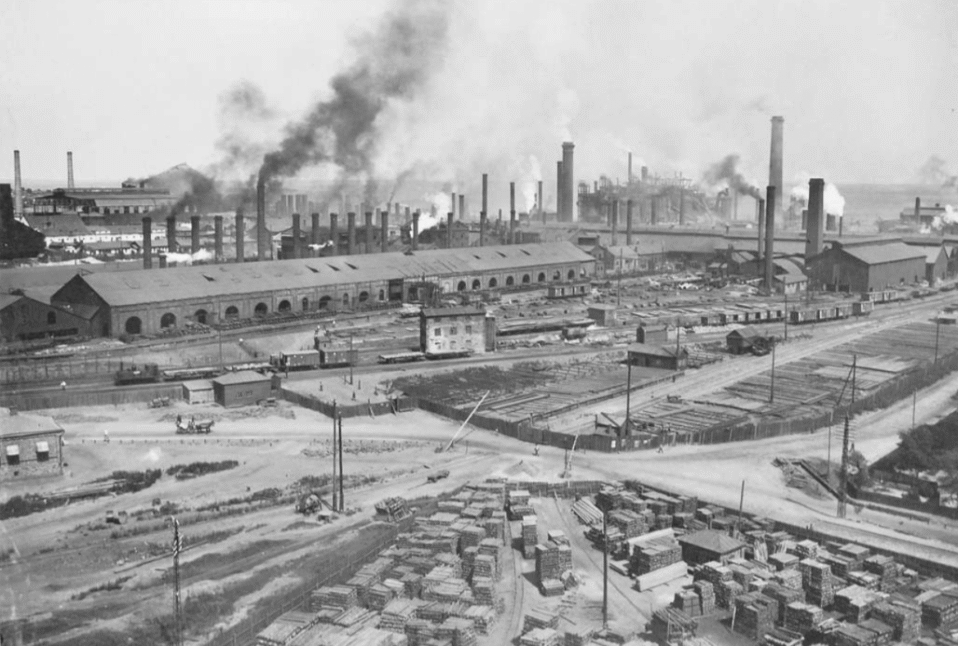

Viktor Moroz
When we talk about the connections between Wales and Ukraine, most people think of modern cultural projects or volunteering. Yet this relationship began much earlier — in the 19th century, when a Welsh industrialist laid the foundations for what would become the city of Donetsk in Ukraine.
From Merthyr Tydfil to the Ukrainian Steppes
John James Hughes was born in Merthyr Tydfil, Wales — then the heart of British metallurgy. An experienced engineer, he was known for building large industrial projects from scratch. That reputation led the Russian Empire to grant him a concession to help modernise its metallurgical industry.

Portrait of John Hughes
In 1869, Hughes received permission to build a plant producing railway rails and armour plating for the navy. In the summer of 1870, at the age of 55, he assembled a team of around one hundred Welsh specialists, loaded equipment onto eight ships, and set off for what was then the Katerynoslav Governorate, on the territory of present-day Ukraine.
Yuzivka: The Beginning of Donetsk
On the empty steppe near the Kalmius River, Hughes founded a metallurgical plant and a workers’ settlement. Locals called it Yuzivka — a name derived from the pronunciation of the surname “Hughes” as “Yuz”.
Hughes built not only a factory but an entire urban infrastructure: hospitals, schools, an Anglican church, and even a fire brigade. By the end of the 19th century, Yuzivka had grown into one of the most important industrial centres in what is now eastern Ukraine.
How the Empire Took Everything from the Hughes Family
John Hughes died in 1889 while on a business trip to St Petersburg. His body was returned to Britain and buried at West Norwood Cemetery beside his wife.
After his death, his sons continued the business, modernising production and expanding the town. By 1913, the Hughes enterprise had become one of the largest metallurgical works in the Russian Empire.
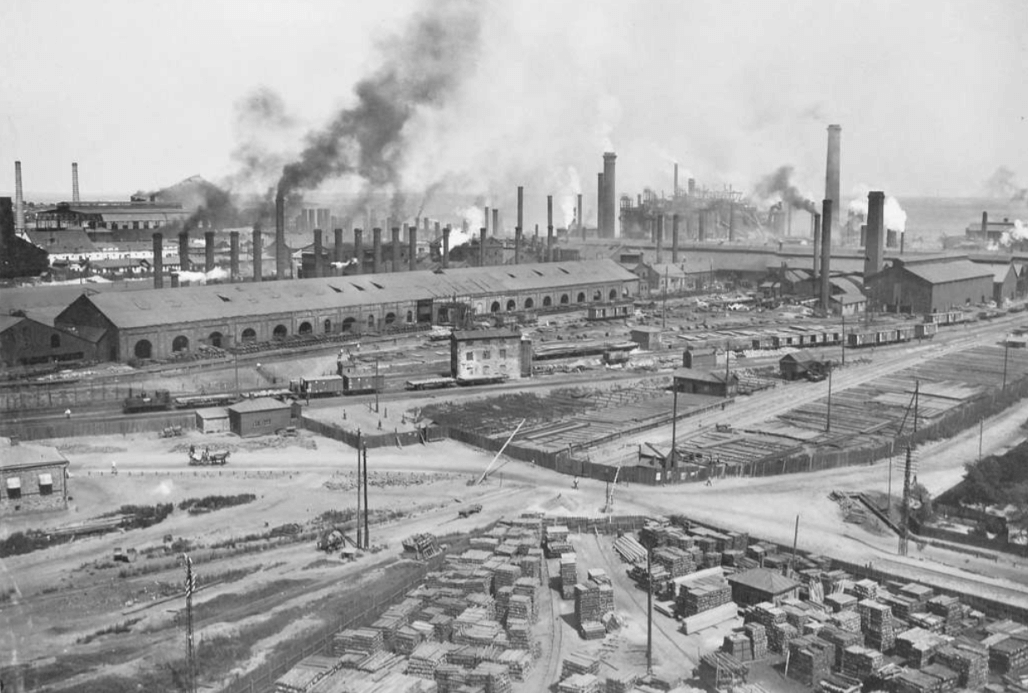
Yuzivka Metallurgical Plant in 1914 — one of the largest enterprises in the Russian Empire
Following the revolutions of 1917–1919, the new Bolshevik authorities nationalised the enterprise. The Hughes family lost everything — factories, property, and infrastructure built over decades. Most of the Welsh community was forced to leave Ukraine.
Yuzivka, founded by a Welsh entrepreneur, was absorbed into the Soviet industrial system. The city was renamed Stalino in 1924 and later Donetsk in 1961.
War in the 21st Century and a Destroyed Legacy
Today, Donetsk is once again engulfed by war. The city that began as a Welsh industrial project has become one of the symbols of Russia’s aggression against Ukraine.
Hughes’s story reminds us that Donetsk is not a “foreign” land or an imperial “gift”. It is a Ukrainian city shaped by labour, migration, and openness to the world — not by imperial conquest.
Despite everything, John Hughes’s name is returning to public memory. It reminds us that the ties between Wales and Ukraine run deep, and that their shared history is far richer than it may first appear.

Monument to John Hughes at Donetsk National Technical University, erected in 2001 (sculptor Oleksandr Skorykh)
Post a comment